
In cricket, the curator is the person who prepares the pitch. Everything depends on them and nobody claps.
Tipperary: the estate that took the harder road
Tipperary sits near the ceiling of the Shevaroys' altitude band and washed the lot that became the Maiden Over, which is the uncommon road in these hills.
There is an Irish place name sitting at 4,700 feet in the Shevaroy Hills, on a road named after it, and nobody can tell you precisely why. Yercaud is full of this: names left behind by planters who arrived in the decades after 1820 and stayed long enough to put up bungalows, name the roads and disappear.
Tipperary stayed. It dates itself to 1880, it is still a working coffee estate, still at the top of this range's altitude band, and it is where our Maiden Over comes from.
The decision that makes this lot unusual
Most coffee in the Shevaroys is dried whole. The cherry goes on the patio fruit and all, the sun does the work, and what comes out is the sweet, heavy, fruit-forward cup that most Indians picture when they picture Indian coffee. It is the traditional method here, it needs no water, and there is nothing wrong with it.
Tipperary washed this lot.
Every Indian coffee is hand-picked, pulped and sun-dried. What decides whether a lot is washed or natural is what happens at the pulping stage: whether the fruit comes off the bean before drying, or dries on it. Washing means pulping the cherry, fermenting the mucilage off the bean, washing it clean, and drying what is left. It costs water, equipment, labour and attention, and it removes the fruit's cushion. Every defect that natural processing would have hidden under sweetness is now exposed in the cup. You wash a lot when you believe the coffee underneath can take the scrutiny.
In these hills, washed arabica happens mainly on the larger, specialty-minded estates. It is the uncommon road, chosen deliberately.
That lot cupped at 82.6 on the hundred-point specialty scale. Above 80 is specialty grade. 82.6 is a good coffee that has been handled carefully at every step where it could have been ruined.
The decision was the owner's. Mr N. Satyendran and his family moved the estate's focus to a washed arabica process to show a clean, vibrant cup: the pure flavour, the mildness and the aromatic complexity of a high-grown lot, with nothing for the fruit to hide behind.
Up at the top of the band
Estates in the Shevaroys sit between roughly 1,000 and 1,500 metres. Tipperary is at 4,700 feet, about 1,430 metres, near the ceiling of the range, where the average sits around 21°C and the nights are properly cold.
Cold nights are the whole point. The colder it is after dark, the slower the cherry goes from set to ripe, and a slow ripening lays down more sugar and more of the compounds that roasting turns into aroma. It also produces a denser, harder bean, which takes heat differently in the roaster and holds its sweetness through a medium roast instead of flattening out.
Altitude is not a badge on a bag. It is a longer wait, and the wait is what you taste.
The varietals are Selection 9 and 5B, as the estate states them. Picking is in November, when only the ripe berries come off.
A coffee estate that is also a place people stay
Tipperary is not a single-purpose plantation. There is a colonial bungalow on it more than a century old, and the estate now runs a set of stays across the property: cabins, a treehouse, the bungalow itself.
That is worth saying plainly rather than hiding. Across Yercaud, estates that have survived this long have usually survived by doing more than one thing. Coffee prices move; a farm that can let a room is a farm that can wait for a better year instead of taking a bad one. The hospitality is not a distraction from the coffee. For a lot of these hills, it is what keeps the coffee possible.
What we do with it
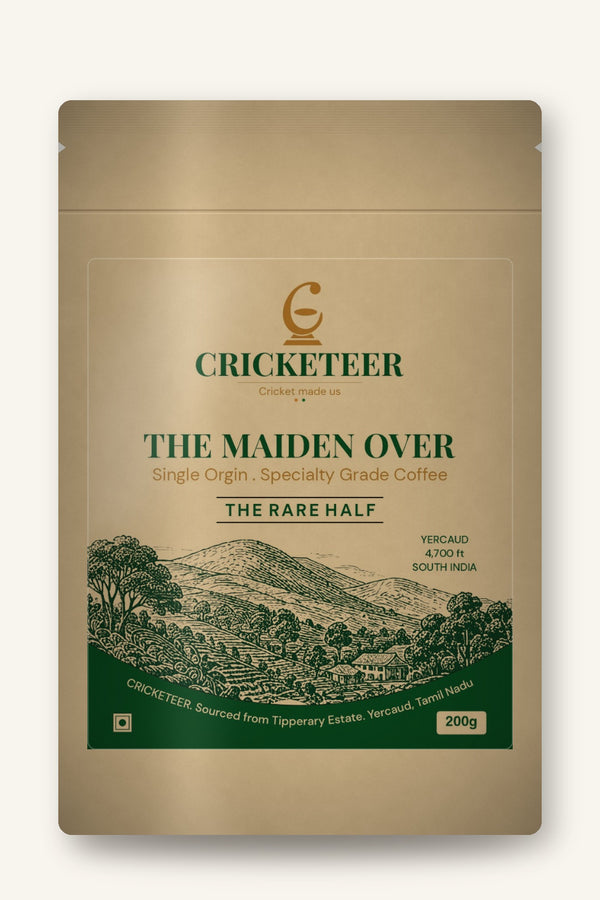
We buy it, we roast it in small batches, and we sell it as Maiden Over - The Rare Half, in 200 g.
The name is a maiden over: six balls, no runs. The first over of a spell, where nothing is given away. It seemed right for a coffee somebody decided to make harder than it needed to be.
It placed in the top five Arabica Washed coffees at the Coffee Board of India's Fine Cup Award 2026, from more than four hundred samples entered across the country.
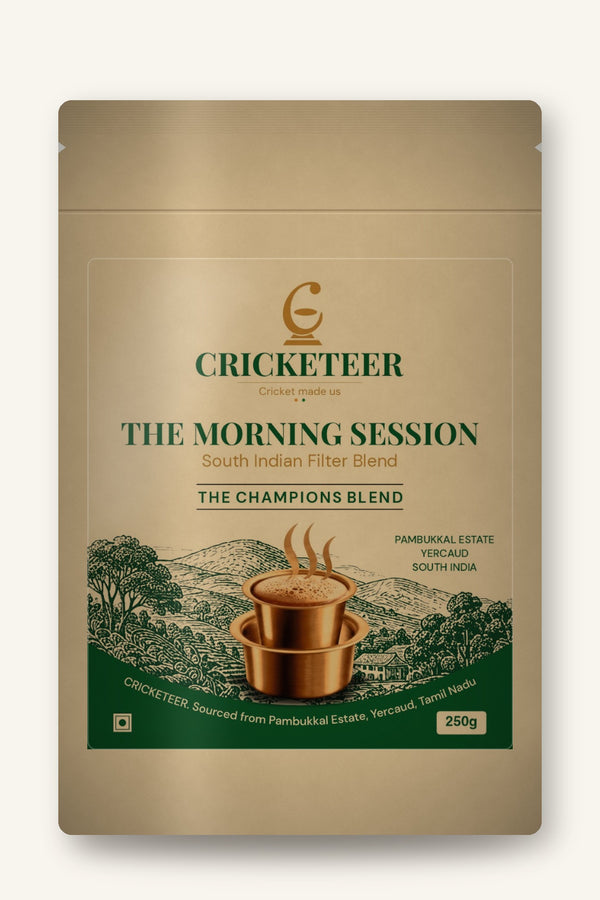
The coffees in this story
Stay close to the game.
New drops, stories from outside the rope and things worth sending to the group chat. No spam.